




















A bathroom window can make a room feel bright, open, and welcoming - until the neighboring house, a second-story deck, or a busy sidewalk turns that same window into a privacy problem. The right privacy blinds for bathrooms let you keep natural light without feeling exposed, while standing up to daily humidity, splashes, and temperature changes.
The best choice is rarely the cheapest ready-made blind on the shelf. Bathroom windows often have trim, deep sills, awkward sizes, or close sightlines that call for a precise fit. A custom blind gives you cleaner coverage, more dependable operation, and a finish that suits the rest of your home.
What Bathroom Privacy Really Requires
Privacy means more than covering a window at night. In many Lower Mainland homes, bathrooms face close-set neighbors, shared laneways, patios, or upper-level windows. If a blind leaves gaps at the sides, sits too high above the sill, or does not cover the glass evenly, the room may still feel exposed.
Think about when privacy matters most. A main-floor powder room facing the street may need complete coverage at all times. A primary ensuite with a high window may only need partial screening while still benefiting from daylight. A bathroom beside a shower may need a window treatment that can be raised easily for ventilation and lowered again without touching damp fabric.
The goal is to match the blind to the window's position, the view from outside, and how you use the room. That is why on-site measurement matters. Even a small variation in window width can create the light gaps that make a bathroom blind less private than expected.
Why Moisture Resistance Matters
Bathrooms are not the same as bedrooms or living rooms. Steam from showers, condensation on cold glass, damp towels, and regular cleaning products all affect window coverings over time. Materials that absorb moisture can hold odors, stain, sag, or become harder to keep clean.
Roller blinds are a practical choice because their smooth, simple construction has fewer places for moisture and dust to collect. Depending on the fabric selected, they can provide anything from soft filtered light to near-total visual privacy. They also sit close to the window, which creates a tidy, modern look in smaller bathrooms.
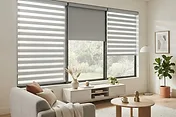
Zebra blinds can also work well in bathrooms when paired with suitable materials and a proper installation. Their alternating sheer and opaque bands allow more flexible light control than a standard roller blind. You can align the solid bands for privacy or adjust the layers to bring in filtered daylight. They are especially appealing in a larger ensuite where style and adjustable light matter as much as coverage.
Neither option is automatically right for every room. If the window sits directly beside a shower and gets frequent splashing, a moisture-tolerant roller blind is often the lower-maintenance choice. For a well-ventilated bathroom with a window away from the wet zone, zebra blinds may offer the look and control you want.
Roller Blinds for Simple, Reliable Coverage
Roller blinds are a strong fit for homeowners who want privacy without visual clutter. One continuous panel lowers smoothly over the window, making it easy to cover the glass from top to bottom. For bathrooms with limited space, that clean profile can make a noticeable difference.
Privacy fabric is available in a range of openness levels. A blackout or room-darkening fabric provides the most coverage, but it may make a small bathroom feel dim during the day. A light-filtering privacy fabric can be a better middle ground. It softens harsh sunlight and blocks clear views into the room while still allowing a pleasant glow.
Color also matters. White and soft neutral fabrics tend to keep a bathroom airy, but the opacity of the material matters more than the color alone. A dark sheer blind can still reveal silhouettes at night when interior lights are on. Before choosing a fabric, consider both daytime and nighttime privacy.
For a window that needs to be opened often, the blind should be measured and positioned so it does not interfere with handles, tilt-and-turn hardware, or the natural use of the sill. A professional installer can identify those details before fabrication rather than trying to solve them after the blind is in place.
Zebra Blinds for Adjustable Light and Privacy
Zebra blinds use a double-layer fabric with alternating solid and sheer stripes. As the layers move, you can shift from a filtered view to greater privacy without fully raising the blind. That flexibility is useful in bathrooms where you want daylight in the morning but stronger coverage in the evening.
They work particularly well for tall, narrow windows and larger ensuite windows where a plain roller blind might feel too minimal. The layered design adds dimension without requiring curtains, which can be cumbersome in a humid room.
There is a trade-off. Zebra blinds have more moving fabric than roller blinds, so they benefit from regular gentle dusting and sensible placement away from direct water spray. They also need accurate alignment to operate and look their best. A blind that is slightly off-level can make the horizontal bands appear uneven every time it is lowered.
For homeowners who prefer a polished, coordinated finish across bedrooms, living areas, and bathrooms, zebra blinds can create a consistent look while still giving each room the light control it needs.
Choose the Right Privacy Level for Your Window
A bathroom blind should solve the view issue without forcing you to live in a dark room. Start by looking at the sightline from outdoors, not just from inside. Stand in the yard, on the deck, or at the neighboring window level if possible. You may find that only the lower portion of the glass needs strong coverage, or that the entire window is visible after sunset.
These common situations call for different approaches:
- Street-facing or ground-level windows: Choose a highly opaque roller blind or a zebra blind with solid bands that fully cover the sightline.
- Upper-floor ensuite windows: Light-filtering fabrics may provide enough privacy while preserving daylight and an open feeling.
- Windows near a shower or tub: Prioritize moisture-tolerant materials, easy cleaning, and a placement that avoids direct splashing.
- Windows facing close neighbors: Focus on side coverage and precise measurements, since narrow gaps can be more noticeable than the fabric itself.
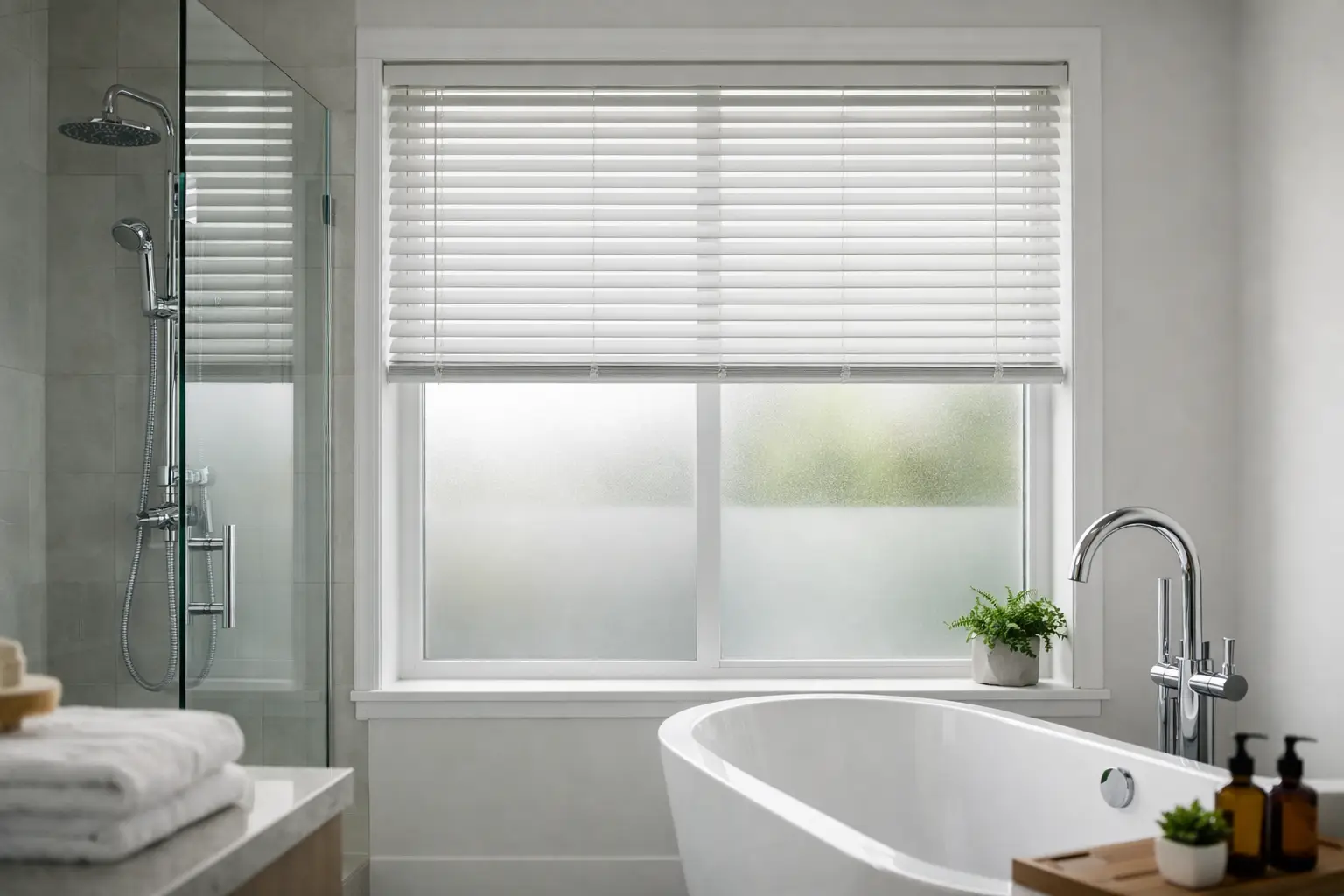
If your bathroom has frosted glass, you may still want a blind. Frosting obscures detail, but it does not always block shadows, nighttime visibility, or strong sun. A blind adds control when you need it and can soften the hard look of frosted glass.
Installation Details That Make a Difference
A made-to-measure blind performs better because it is designed around the actual opening, not a standard-size assumption. The installer will determine whether an inside mount or outside mount gives better privacy and clearance.
An inside mount fits within the window recess and offers a clean built-in appearance. It works best when the recess is deep enough and reasonably square. An outside mount sits above and beyond the window opening, which can reduce side gaps and cover irregular trim. For a bathroom window with shallow depth or uneven framing, that extra coverage can be the more practical option.
Cordless operation is a smart choice in family homes. It creates a cleaner appearance, reduces dangling parts near sinks and counters, and makes everyday use simple. Motorized shades can also be useful for hard-to-reach clerestory windows, although they are not necessary for every bathroom. The best choice depends on window height, electrical access, budget, and how often you need to adjust the blind.
At Bloom Bug, the process begins with a remote estimate and moves to precise on-site measurements once you are ready to proceed. That approach helps prevent the usual problems with bathroom blinds: poor coverage, awkward mounting, and a finished look that feels like an afterthought.
Keep Bathroom Blinds Looking Their Best
Bathroom blinds do not need complicated maintenance, but a little routine care helps. Run the exhaust fan during and after showers to reduce lingering humidity. Open the window when weather allows, especially during damp Lower Mainland months. Then dust the blind gently with a clean microfiber cloth or a soft brush attachment.
For small marks, use a lightly damp cloth and mild soap if the fabric care instructions allow it. Avoid soaking the material, using abrasive cleaners, or spraying cleaning products directly onto the blind. Those products can leave residue or affect the finish over time.
If condensation regularly runs down the window, wipe the sill and glass rather than letting moisture sit behind the blind. This protects the window area as well as the window covering.
A well-chosen bathroom blind should feel almost effortless: lower it for privacy, raise or adjust it for light, and enjoy a room that feels comfortable at every hour. When the material, fit, and installation are right, you get a practical layer of privacy without giving up the natural light that makes a bathroom feel like part of your home.