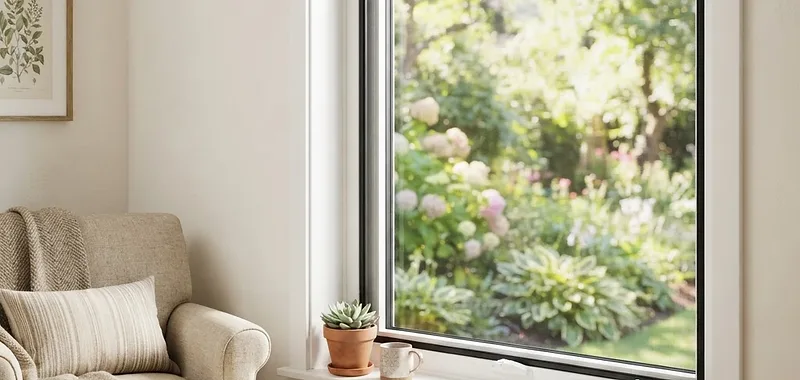
Not all window screens are the same. The mesh you choose changes visibility, airflow, durability and how well it keeps bugs — and bigger pests — out.
Standard fiberglass mesh is the default in most homes. It's economical, flexible, lets in good light and air, and is fine for typical insect pressure. Its weakness is tearing — a cat or a pushed-on screen will puncture it.
Aluminum / metal mesh is rigid and far more durable. It resists tears, holds up to pets and kids, and is the go-to when rodents chew through fiberglass. It costs more and can dent if pressed hard, but it lasts years longer.
Pet-resistant mesh is a heavier vinyl-coated polyester woven tighter and stronger than standard fiberglass. It's built to take claws and leaning dogs without ripping, while keeping good visibility.
No-see-um / solar mesh has a finer weave that blocks tiny biting insects and reduces some heat and glare — useful in low-lying or riverside areas like Richmond, Ladner and Pitt Meadows where tiny flies are a problem.
Retractable screens roll away into a housing when not in use, ideal for doors and large openings where a fixed screen would be in the way.
Choosing. For most windows, standard fiberglass is enough. Choose metal mesh for ground-floor units, pet homes and rural properties; pet-resistant mesh for animals; no-see-um mesh for fine-insect zones. Not sure? Bloom Bug can recommend the right mesh for each opening.