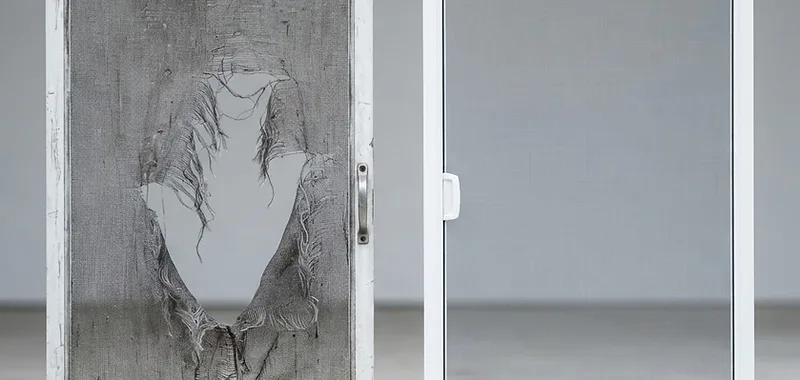
A torn window screen is one of those small problems that quietly costs you comfort and money. The moment a hole appears, mosquitoes and flies get in — and the question becomes: do you repair the screen or replace it?
The right answer depends on the damage, the screen's age, and the material. Here's how to decide, with realistic Lower Mainland context.
When a Repair (Patch) Makes Sense
A patch is a quick, cheap fix for isolated damage on an otherwise healthy screen. Consider repairing when:
- There's a single small hole (under a few centimetres)
- The surrounding mesh is tight, clean, and intact
- The frame is square and undamaged
- You need a same-day fix before guests arrive
Patches aren't pretty, and they don't restore full strength, but they buy time — especially at the start of bug season.
When Re-Screening Beats a Patch
If the mesh is already failing in one spot, the rest is usually close behind. Re-screening (replacing the mesh in the existing frame) is the better call when:
- There are multiple holes or tears
- The mesh is sagging, brittle, or discoloured from age and sun
- You're repairing the same screen repeatedly
- You want to upgrade to a finer or more durable mesh
Re-screening keeps your existing frame and replaces only the mesh — affordable, fast, and a big upgrade in performance.
When Full Replacement Is the Right Move
Sometimes the frame is the problem, not just the mesh. Replace the whole screen when:
- The frame is bent, cracked, or warped and no longer seals
- The frame is the wrong size for the opening, leaving gaps
- Plastic or vinyl corners have become brittle and snapped off
- You're upgrading sliding door screens and the old track is worn
- You want metal mesh on a frame that can't support a re-tension
A new custom-built screen, sized precisely to your opening, will seal tightly and last far longer than a patched or loose-fitting stock screen.
The Cost Picture (Lower Mainland Context)
Exact prices depend on size, material, and options, but here's the relative value:
- A DIY patch — a few dollars, minutes of work, short-lived
- Re-screening an existing frame with standard mesh — an affordable upgrade that reuses your frame
- Re-screening with metal mesh — more durable, ideal for pets and high-traffic doors
- A full custom screen — higher upfront cost but the longest-lasting, best-fitting solution
In the long run, a full custom screen or a metal-mesh re-screen almost always costs less per year of bug-free comfort than repeated patches on an aging fiberglass screen.
Sliding Patio Doors: A Common Case
Patio sliding screen doors take the most abuse of any screen in the home. If the door frame is fine but the mesh is torn, re-screening the existing door with durable metal mesh is one of the best value upgrades we offer — it revives a door you already own with mesh that resists pets, kids, and daily traffic.
If the frame is bent or the door jumps its track, a new custom sliding screen is the cleaner fix.
A Simple Decision Guide
- One small hole, healthy mesh → patch
- Several holes or aging mesh, good frame → re-screen
- Damaged or ill-fitting frame → replace
- Pet or high-traffic door with torn mesh → re-screen with metal mesh
- Door jumps track or won't slide → replace
Built in Coquitlam for the Lower Mainland
Bloom Bug Screens does all three — patches guidance, re-screening of existing frames, and fully custom replacement screens — built in our Coquitlam workshop and installed across the region.
Not sure which path your screen needs? Get a quote or book a measurement and we'll recommend the most cost-effective option.