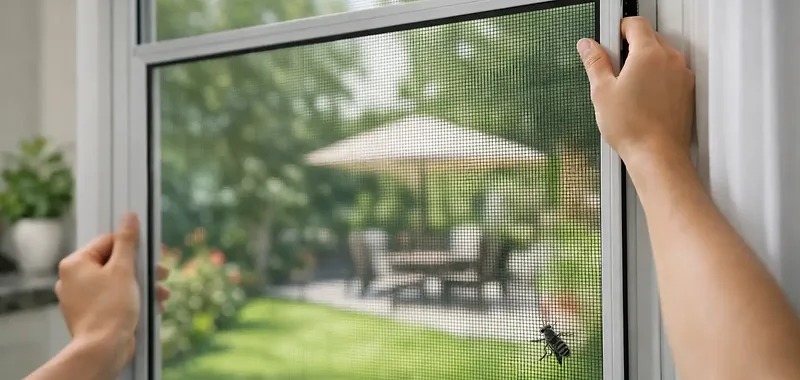
Why Custom Window Screens Make a Difference
A bug screen is only effective when it fits properly.
Even a small gap can provide an entry point for insects. A poorly fitted screen can also rattle, bow, sag, or pop out of the window frame.
Custom screens are manufactured according to the actual dimensions and configuration of your window rather than relying on a standard store-bought size.
A properly fitted screen should:
- Sit securely within the window opening
- Help keep mosquitoes, flies, wasps, and other insects outside
- Allow fresh air to circulate
- Maintain good visibility
- Complement the existing window frame
- Be easy to remove when cleaning is required
Choosing the Right Screen Mesh
Standard fiberglass insect mesh is a practical and affordable choice for most residential windows. It provides good airflow and visibility while helping keep common flying pests outside.
For homeowners looking for something stronger, metal mesh window screens provide greater resistance than standard fiberglass. Metal mesh can be particularly useful for ground-level windows, basements, garages, and properties where mice or rats are a concern.
Screens for Different Window Styles
Custom screens can be manufactured for many types of residential windows, including:
- Sliding windows
- Casement windows
- Awning windows
- Single-hung windows
- Push-out windows
- Oversized windows
Replacement Window Screens
If your existing screen is missing, bent, damaged, or constantly falling out, replacing it with a custom-made screen may be more practical than trying to adapt a generic screen.
Caring for Your Window Screens
Window screens require relatively little maintenance. Dust and debris can usually be removed with gentle water and a soft cloth. Check your screens periodically for small tears, loose spline, bent corners, and damaged clips.
Open the windows. Enjoy the breeze. Keep the pests outside.